
When your legs ache, feel heavy, or swell by the end of the day, you start looking for a solution, preferably one close to home. If that search has led you to endovenous laser ablation in Boca Raton, you may still have questions no one has fully answered. Endovenous laser ablation is one treatment option for symptomatic varicose veins, yet many people hear the name without ever hearing what actually happens in the treatment room. That uncertainty can keep a person from booking a visit at all.
Knowing the process ahead of time helps you ask better questions at your consultation and feel more at ease when you arrive. Below, we walk through how the procedure works, who qualifies after ultrasound mapping, what recovery and compression look like, and how insurance coverage is typically decided.
Key Takeaways
- Endovenous laser ablation (EVLA) closes a malfunctioning vein using heat from a thin laser fiber, guided by ultrasound.
- Candidacy is confirmed by ultrasound mapping, not by how veins look from the surface.
- It is a same-day, minimally invasive procedure. Most patients can resume light activity right away, and walking is encouraged.
- Coverage generally depends on documented medical necessity for symptomatic veins and varies by plan, and our team can help you sort it out at a free screening.
What Is Endovenous Laser Ablation?
Endovenous laser ablation, often shortened to EVLA, is a minimally invasive procedure that closes a vein that is no longer working properly. A thin fiber inside the vein delivers laser energy that seals it. “Endovenous” means inside the vein, and “ablation” means destroying or removing tissue. Here, it refers to sealing the vein shut.
To see why a vein might need closing, it helps to know how healthy veins work. Inside the leg veins, tiny one-way valves keep blood moving up toward the heart. When those valves stop closing properly, blood pools, pressure builds, and legs may ache, feel heavy, swell, or show bulging veins.
EVLA is typically used for the great and small saphenous veins, which are the main veins that run along the leg. Once a malfunctioning vein is closed, it no longer carries blood, and healthy veins carry it instead. If you are exploring varicose vein treatment options, EVLA is one approach your care team may discuss, depending on what your evaluation shows.
How Endovenous Laser Ablation Works
The procedure is done in the office, and it begins well before the laser is turned on.
Ultrasound Mapping Plans the Treatment
Treatment starts with duplex ultrasound, which is imaging that shows how blood is flowing through your veins. This step shows which veins are leaking, where the problem begins, and whether your deep veins are healthy. At the Kimmel Institute, we perform same-day ultrasound imaging as part of your evaluation. The imaging itself is a standard, non-invasive step, and it serves as the roadmap for everything that follows.
Numbing and Laser Fiber Placement
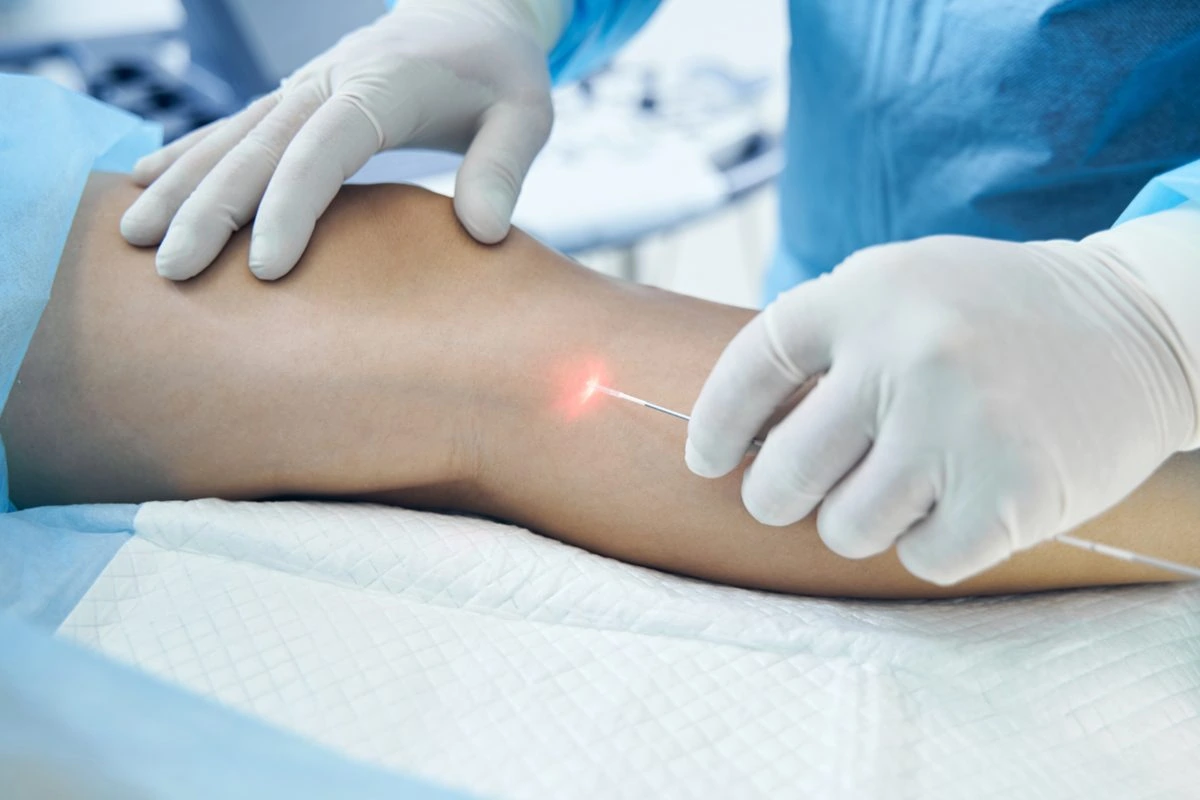
Next, ultrasound is used to guide a catheter into the vein. A catheter is a narrow, flexible tube, and the laser fiber passes through it. To keep you comfortable, the treatment area is numbed. Many EVLA procedures use tumescent anesthesia, which is numbing fluid placed in the tissue around the vein.
Closing the Vein With Heat
Once the fiber is in position, it is withdrawn gradually while laser energy heats the vein wall. The heat causes the vein wall to collapse and seal shut, and the treated vein stops carrying blood. This is a same-day procedure.
Experience Behind the Laser System
Dr. Kimmel is a board-certified cardiovascular surgeon who has practiced in Boca Raton for over 30 years. He leads a team of vascular specialists at the Kimmel Institute, a designated training center for other physicians and staff in the use of the Dornier Laser System for vein treatment. Here, experience is the difference.
Who Qualifies After Ultrasound Mapping
Candidacy is decided during a consultation, based on your symptoms and ultrasound findings together, not on how veins look from the outside.
Symptoms That Support Treatment
Varicose veins can cause aching, heaviness, swelling, skin changes, and bulging veins. When symptoms like these are present, treatment may be considered medically necessary rather than purely cosmetic, and that distinction matters later when we talk about insurance. Some patients try compression stockings and lifestyle measures first. Every person’s legs are different, so your care team decides what is appropriate for you.
What the Ultrasound Reveals
Ultrasound can show reflux, which is blood flowing backward in a saphenous vein because its valves are not closing well. It also shows the size of the vein, which helps determine whether laser treatment suits it. It confirms whether your deep veins are healthy, too. These findings are what make a personalized plan possible.
When Another Approach Fits Better
Laser ablation is not right for everyone, and your evaluation is how we sort that out. Clinical references list a few situations where the procedure is not appropriate, such as an acute deep vein thrombosis (a new blood clot in a deep vein) or arterial insufficiency (reduced blood flow through the arteries).
Smaller or surface veins may be treated differently. For spider veins, we may recommend sclerotherapy, an injection that closes small veins. For bulging veins near the skin, we may recommend ambulatory microphlebectomy, a minor procedure that removes them. Some patients benefit from a combination, and the goal is to match the treatment to your veins.
Not sure if you qualify? Start with a free screening.
Recovery and Compression After Treatment
Recovery is typically short, and the care team gives individual instructions after the procedure.
The First 24 to 48 Hours
Most patients resume light activities right away, and walking is encouraged to support circulation. Most also experience minimal pain and can return to work within 24 to 48 hours. Following your care team’s instructions supports your results.
How Compression Stockings Help
Compression stockings are snug-fitting garments that apply gentle pressure to the legs. This pressure helps support blood flow back toward the heart and can ease discomfort. They are typically worn for a short period after treatment to optimize results and minimize complications. Your care team will tell you what to wear and for how long, since the right plan depends on your treatment. If you have questions about fit or comfort, ask us at your visit.
Activity Guidelines After Treatment
Keep walking in the days after treatment. Plan to avoid strenuous exercise for 1 to 2 weeks, or as your care team advises. Over the long term, low-impact activity supports vein health. We recommend walking, swimming, or cycling.
Results and Follow-Up Visits
A 2024 meta-analysis in the Journal of Vascular Surgery: Venous and Lymphatic Disorders reviewed outcomes for laser ablation of the great saphenous vein. The treated vein stayed closed (known as occlusion) in about 98% of cases at 1 month and about 94% at 1 year. A meta-analysis combines the results of many studies, and individual results vary. New varicose veins can still form over time because the underlying factors, such as genetics and aging, remain. For that reason, follow-up care is part of your plan.
Insurance Coverage for Symptomatic Veins
Coverage depends on your plan and on the documentation in your medical record.
What Medical Necessity Means
Insurers, including Medicare, generally look for treatment of symptomatic disease that is supported by the medical record, including your history, exam, ultrasound findings, and a documented plan of care. Cosmetic-only treatment is generally not covered.
Documentation matters. In March 2026, First Coast Service Options, Florida’s Medicare contractor, flagged laser and other vein ablation claims as frequently denied. A common finding was that the medical record did not support medical necessity. The Medicare policy that applies in Florida is Local Coverage Determination L38720. It covers treatment of chronic venous insufficiency, a long-term condition in which leg veins have trouble returning blood to the heart. For more on pricing, see our guide to the cost of varicose vein treatment.
How the Practice Handles Coverage
At the Kimmel Institute, we accept Medicare, managed care, and many private insurance plans, and our staff works directly with your insurance provider to help minimize your personal financial responsibility. Every plan is different, so we cannot promise what yours will cover, but we can help you understand your options. Bring your coverage questions to a free screening, or contact us with questions.
Want to review your coverage with our team? A free screening is a good place to start.
Next Steps for Laser Ablation Care in Boca Raton
Endovenous laser ablation is an ultrasound-guided, same-day procedure, and ultrasound mapping confirms whether it fits your veins. Recovery follows individual instructions from your care team, with walking encouraged and compression stockings typically worn for a short period. Insurance coverage generally rests on documented medical necessity. If you are weighing laser ablation in Boca Raton, our team is glad to answer your questions, explain your options, and help you decide what comes next at your own pace. When you are ready, we would be happy to meet you.
Frequently Asked Questions
What conditions does laser ablation treat?
Laser ablation treats symptomatic varicose veins caused by faulty valves in the main veins of the leg. When those valves stop closing properly, blood pools, and legs may ache, feel heavy, swell, or show bulging veins. A consultation and ultrasound mapping determine whether this treatment suits your veins.
How do I prepare for laser ablation?
Your care team gives specific pre-procedure instructions at your consultation, once your ultrasound mapping is complete and your treatment plan is set. Until then, make a list of your symptoms, current medications, and questions to bring with you. Please follow your care team’s instructions rather than general advice online.
How long do laser ablation results last?
In a 2024 meta-analysis, the great saphenous vein stayed closed after laser ablation in about 98% of cases at 1 month and about 94% at 1 year. Those figures cover the first year only. New veins can form over time, and results are not guaranteed. Your care team will discuss follow-up care with you.
Is laser ablation only a cosmetic procedure?
No. It treats symptomatic vein disease and can relieve aching, heaviness, and swelling. Insurers distinguish medically necessary care for symptomatic veins from cosmetic-only treatment, which is generally not covered, so clear documentation of your symptoms and ultrasound findings matters.
Is laser ablation safe, and what are the risks?
Common minor effects include bruising and tenderness. Rare risks include blood clots and nerve irritation, which can cause numbness or tingling. Ultrasound screening helps determine whether the procedure suits you, and your care team will review the risks with you in advance. As with any medical procedure, outcomes cannot be guaranteed.